

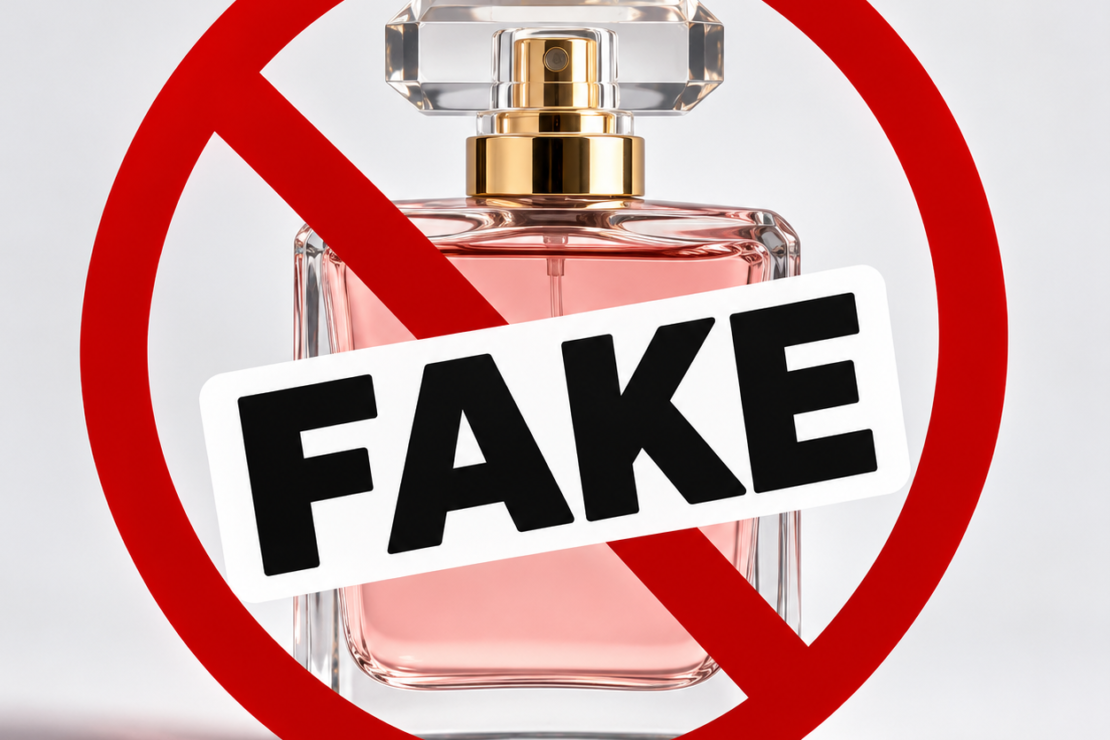
The UK launches “Face the Fakes” after discovering dangerous substances in counterfeit cosmetics. And some of the findings are anything but beautiful.
That Luxury Perfume at Half Price? Think Again
We all love a bargain.
A designer perfume at 70% off? Tempting.
A luxury face cream for the price of a sandwich? Even better.
And when the packaging looks perfect, the logo is exactly where it should be, and the seller has hundreds of five-star reviews, what could possibly go wrong?
Well, according to the UK’s Intellectual Property Office (IPO), quite a lot.
On November 2, 2026, the IPO launched “Face the Fakes”, a campaign warning consumers about the dangers of counterfeit cosmetics, perfumes and skincare products.
Because sometimes, the price you pay for a bargain goes well beyond money.
Mercury, Lead and Methanol. The Beauty Ingredients Nobody Asked For
UK Trading Standards tested 50 seized counterfeit beauty products.
20 of them failed safety tests.
And what did they find?
Mercury in a skin-lightening cream. Lead in a contouring kit. Hydroquinone at a prohibited concentration.
And one counterfeit fragrance containing approximately 80% methanol.
Eighty percent.
At that point, calling it perfume seems rather generous.
These results refer only to the products tested, not to all counterfeit cosmetics. Still, they are enough to make anyone reconsider that suspiciously cheap fragrance.
Apparently, counterfeiters are excellent at copying packaging.
Following cosmetic safety regulations? Not quite their speciality.
When Skincare Becomes a Gamble
Here is another interesting finding.
According to the IPO, 20% of 18-to-24-year-olds who purchased beauty products in 2025 knowingly bought counterfeits, compared with just 6% in 2023.
And 71% of counterfeit cosmetics and toiletries purchases happened online.
The irony?
We have a generation that can explain the difference between retinol, niacinamide and hyaluronic acid without taking a breath.
Yet some are willing to put an unknown substance on their face because the packaging looks convincing.
But counterfeiters do not need to reproduce the original formula.
They only need to make consumers believe they have.
And that is where the real danger begins.
What If Products Could Help Prove They Are Genuine?
The IPO recommends checking sellers, packaging and product information before buying.
Good advice.
But should identifying a genuine product depend entirely on how good consumers are at spotting a fake?
Security holograms can make products harder to imitate. And when combined with unique, dynamic QR codes and anti-copy technology, they add another layer of protection.
Consumers can check authenticity, while brands can detect suspicious scanning patterns, such as the same code appearing repeatedly in different locations.
No technology eliminates counterfeiting entirely. But making genuine products easier to identify is a good start.
Because when someone buys an expensive face cream, they should be wondering whether it will make them look ten years younger.
Not whether they should have studied chemistry before applying it.
At Cuservi, we help brands protect their products with security holograms and advanced QR authentication solutions.
Because beauty products should make people feel good. Not make them regret having skin.
Want to make your products harder to counterfeit? Let’s talk.


