

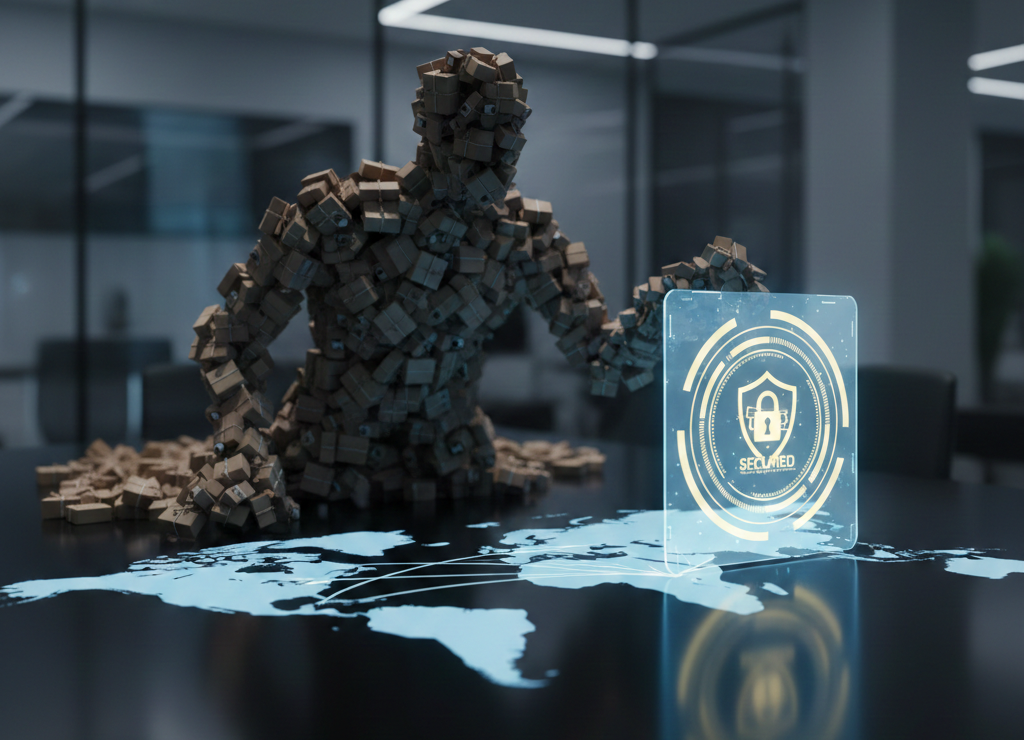
Fake products are not new.
They have been around forever. Fake bags. Fake watches. Fake everything. If it exists, someone has tried to copy it.
But here is the twist. They are not slowing down. They are evolving.
According to the 2025 OECD and EUIPO report, the global trade in counterfeit goods reached 467 billion dollars in 2021. That equals 2.3% of global trade.
In the European Union, the exposure is even higher. Around 4.7% of imports are fake.
That is not a small glitch. That is a parallel economy.
Where Do Counterfeits Come From?
China and Hong Kong account for about 45% of global seizures.
Nearly half.
Other countries such as Turkey, the United Arab Emirates, Singapore, Mexico, Thailand, and Vietnam also play key roles. Some manufacture. Some act as transit hubs. Some do both.
Here is where it gets clever.
Goods move between countries. Labels change. Paperwork shifts. A product can travel more than a frequent flyer and come out with a new identity.
Customs officers are left solving a puzzle. Without the picture on the box.
The Most Affected Industries
Fashion still leads the rankings.
Clothing, footwear, and leather goods represent more than 60% of seizures in some records.
But this is no longer just about fake sneakers.
Counterfeiting now affects:
* Electronics and tech devices
* Toys
* Cosmetics
* Car parts
* Medicines
And this is where it stops being “just annoying” and becomes dangerous.
Fake brake pads do not simply look bad. They fail.
Fake medicines do not just disappoint. They harm.
Fake electrical parts do not just glitch. They spark.
Now we are talking about safety. Not just style.
The New Reality. Small Parcels and E-commerce
The biggest shift is not what is being shipped. It is how.
Counterfeits no longer arrive in giant containers that attract attention.
They arrive in tiny parcels that look harmless.
Today, 60% to 65% of global seizures come from postal or express courier shipments.
Instead of sending one large container, counterfeiters divide goods into thousands of small packages.
Why?
Because it works.
* Smaller financial loss if one package is seized
* Easier to hide among millions of legitimate deliveries
* Vague or undervalued declarations move faster
It is not dramatic. It is strategic.
There is also “localization.”
Components are imported separately. Packaging travels alone. Final assembly happens close to the target market, sometimes even inside Europe.
By the time authorities react, the product looks local.
It is not.
Why Is It So Hard to Stop?
Because the system is overloaded.
Customs can inspect only a small fraction of shipments. Data is often incomplete. Regulations differ across countries. Resources are limited. Criminal networks adapt fast.
Routes change. Names change. Platforms change.
It is like chasing a shadow that keeps switching shoes.
The response must be as agile as the problem.
Why Authentication and Technology Matter More Than Ever
Prevention is no longer optional. It is strategic.
High-security holograms create a visible and technical barrier that is difficult to replicate.
When combined with serialization and digital verification systems, brands gain two layers of protection:
* Instant product verification
* Full traceability
* Detection of duplicate codes
* Better risk analysis
Counterfeiting is fragmented. Digital. Adaptive.
Protection must be too.
At Cuservi, we develop solutions that do more than protect products. We protect trust, brand value, and market confidence.
Because in a world full of copies, authenticity is not just important.
It is power.


