

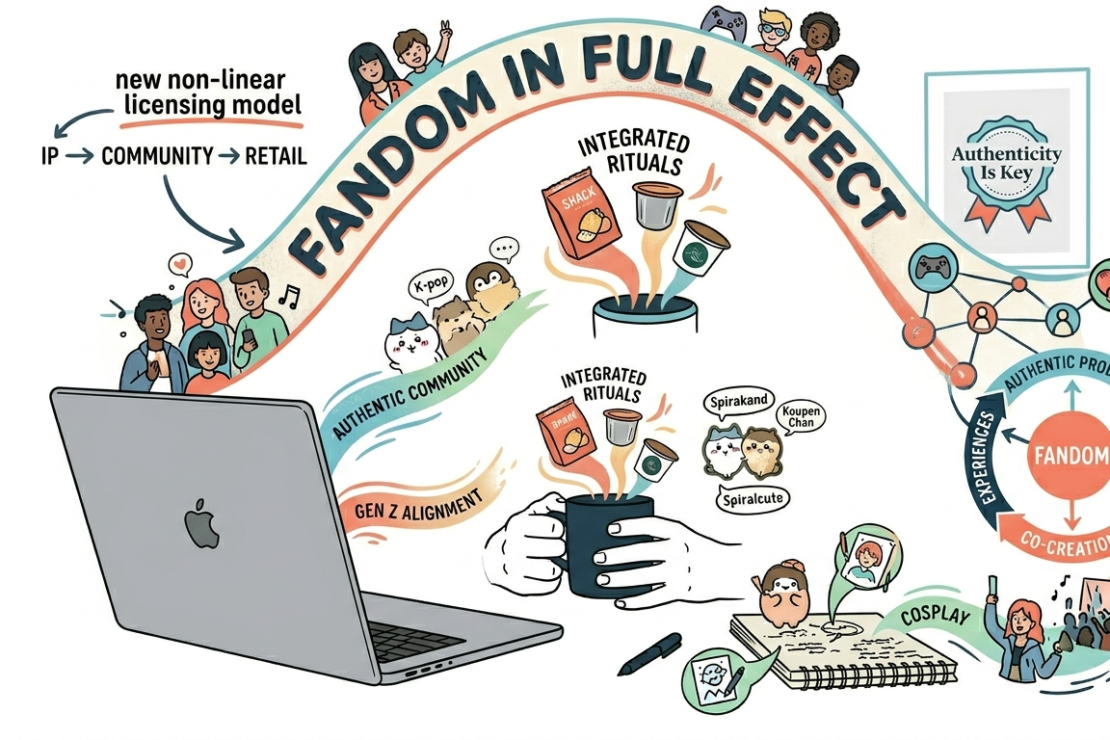
Let’s be real for a second. If you attended the Licensing Expo 2026 (or just skimmed the recaps to save yourself the jet lag), you definitely heard the phrase of the year repeated like a mantra: “fandom is in full effect.” In plain English: communities rule the market, passion is at an all-time high, and fans are the ultimate decision-makers.
But watch out, because here comes the fine print. The consumer of 2026 wasn’t born yesterday. Gen Z and Gen Alpha have grown up decoding hidden ads and branded content right from their phones. They are highly skeptical, fiercely independent, and completely immune to traditional corporate messaging. In fact, recent data shows they trust real peer reviews and uncoordinated forum discussions way more than polished, paid influencer campaigns.
The takeaway? You cannot buy fandom, and you certainly cannot trick it. If a brand extension feels like a lazy, opportunistic cash grab, the community will detect the noise instantly, and they will tear it apart on social media before the ink on the contract even dries. Today, authenticity isn’t a vague, abstract buzzword; it’s a strict operational requirement.
The Pillars of Genuine Brand Extension
To build a licensing program that actually moves the needle without alienating your audience, you need to follow a few non-negotiable rules:
- Protect the Narrative Coherence: A partnership must feel like a natural chapter in the story the IP has already built. If a series is famous for being inclusive, conscious, and feel-good, its collaborations must be evaluated through that exact same lens. If a wellness brand suddenly partners with a chaotic, unhealthy product just for a quick payout, the dissonance destroys the fan’s trust.
- Enhance Existing Rituals (The F&B Boom): Food, beverage, and sports licensing are experiencing a massive gold rush right now. But the ones that succeed don’t just put a famous character on a random bottle. They design gastronomic experiences that amplify habits the fandom already enjoys—like creating the perfect, themed snack specifically for a live game night or a premiere screening. It works because it fits their lifestyle seamlessly.
- Create Real Spaces, Not “Selfie Museums”: Live events, immersive exhibitions, and pop-ups are booming because fans crave physical connections in a digital world. But there’s a catch: the experience must feel like stepping into the IP’s universe. If it looks like a generic, shallow photo-op wrapped in corporate branding, fans will see right through it and walk away.
- Consistency Over Trend-Hopping: True authenticity is a marathon, not a sprint. Launching one beautifully designed collaboration means nothing if your next three choices are completely disconnected. Audiences distrust one-off, trendy gestures that lack continuity. Long-term consistency and actual product quality are the two strongest indicators of authenticity in the eyes of today’s consumer.
The Paradigm Shift: From Trademark to Emotion
Look at success stories like Spiralcute (Chiikawa, Mofusand). They represent a strict community–first and artist–first model. They built a rock-solid, organic bond with the audience through the creator’s art first, and only then did they scale globally with licensing partners who strictly protect that DNA.
Netflix nailed this shift during their keynote: Lean into fandom, but it must be authentic and organic to the core IP. The traditional, linear model of licensing (IP – license – retail) is dead. It has been replaced by a non-linear, completely fan-driven ecosystem.
In a global market pushing $400 billion with brutal competition, licensing is no longer just the commercial exploitation of a corporate trademark. It is the organic extension of an existing emotional relationship between a creator and their community. If you respect that relationship, the fandom will reward you. If you treat them like a target market to be invaded, they will lock the gates.


