

Let’s be honest: the online dating world is getting exhausting.
If you’ve spent any time on Tinder, Bumble, or Grindr lately, you know the routine. You swipe right, match, send a polite “Hey, how’s your week going?”, and usually watch the conversation fade into the void.
Users aren’t the only ones experiencing swipe fatigue—the platforms themselves are feeling the strain. Paid subscriptions are dipping, younger users are seeking genuine connection over endless browsing, and leadership teams are searching for sustainable answers.
So, what does a tech platform do when traditional subscription revenue slows down?
They expand into lifestyle branding, apparel, and entertainment.
Welcome to the new era of dating platforms transforming into lifestyle brands. Whether you’re navigating consumer trends or refining your own business strategy, there is a clear lesson in how these companies are adapting.
The Great Pivot: From Matchmaker to Lifestyle Brand
For years, the core strategy was straightforward: acquire users, place premium features behind a paywall, and scale. However, shifting consumer expectations—particularly among Gen Z—have disrupted that simple funnel. Users are looking for authentic engagement, entertainment, and tangible community connection.
To maintain momentum and diversify revenue, these platforms are moving beyond a software-only approach and embracing strategic licensing and co-branding partnerships.
Here’s how key players are adjusting their strategy:
1. Tinder: Strategic Partnerships and Media Content
With paid subscriber counts softening, Tinder is focusing on consumer lifestyle integrations:
- The Beauty Angle: They partnered with e.l.f. Beauty for a limited-edition cosmetics line, “Put Your e.l.f. Out There,” integrating their brand directly into their audience’s daily prep routine.
- The Entertainment Route: They’re launching Double Date Island, a digital reality show on TikTok produced with ITV Studios. The show directly highlights Tinder’s multi-user features, turning product usage into shareable content.
2. Grindr: Retail Expansion and Cultural Events
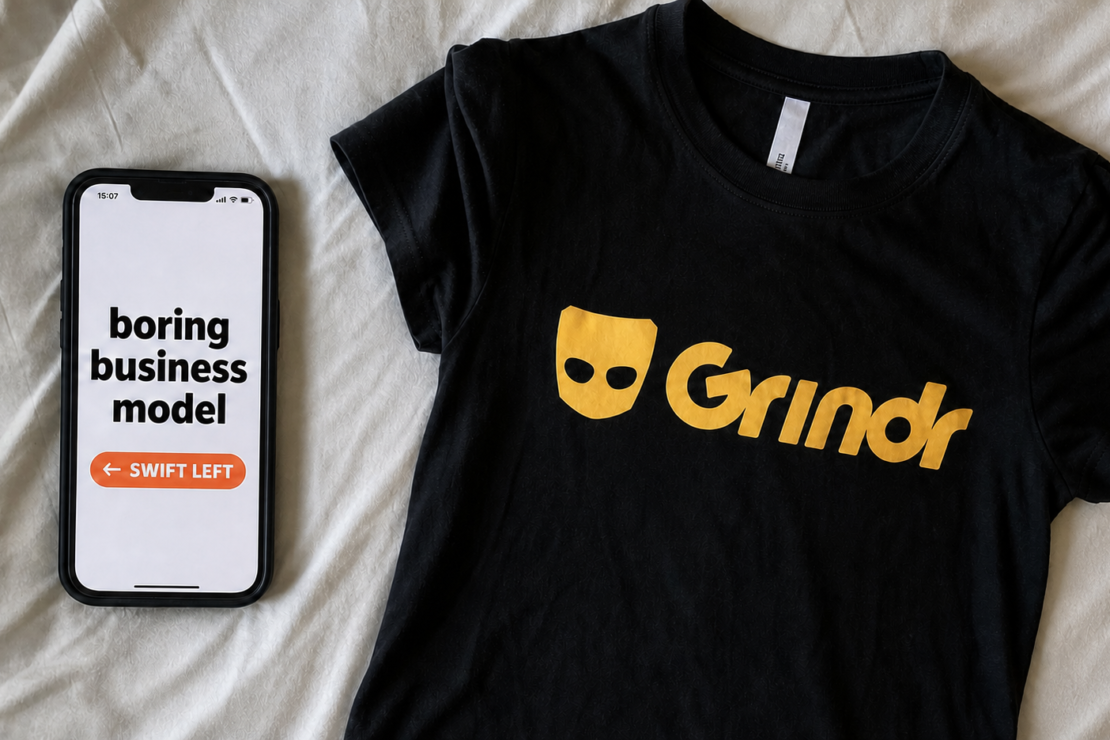
Grindr has taken a direct retail approach, launching an exclusive apparel line distributed in over 670 Spencer’s locations. They’ve also leaned heavily into high-visibility cultural moments, partnering with major artists like Madonna for album rollouts, exclusive in-app takeovers, and high-profile live activations.
3. Hinge & Bumble: Adapting to Market Shifts
While Hinge is focusing on social features like “Friend’s Take” to build user trust, Bumble faces a more challenging market environment. Experiencing a decline in paid users, Bumble is actively evaluating strategic alternatives to realign its positioning. It goes to show that even category leaders must continuously evolve to stay aligned with market demands.
Why Strategic “Drops” Work
Are consumers really looking to buy branded merchandise from software companies?
It turns out that limited-edition releases timed around key seasonal moments—like Valentine’s Day or summer events—drive substantial engagement.
Rather than relying strictly on standard year-round offerings, these brands use targeted drops to generate visibility, maintain cultural relevance, and build brand equity outside the App Store. They are repositioning themselves from mere utility tools into regular components of their audience’s lifestyle.
What This Means for Your Business
You don’t need a massive user base or global enterprise budget to apply these core principles. The underlying takeaway applies across almost every sector: when a primary product model hits a plateau, your underlying brand equity can unlock fresh opportunities.
Diversifying your service lines, exploring strategic co-branding, or repositioning your core offer isn’t just a trend—it’s a modern approach to long-term resilience.
Whether you are planning a strategic pivot, optimizing operational performance, or seeking new revenue streams, navigating these transitions effectively requires a structured plan.
How Cuservi Can Help
At Cuservi, we don’t build dating apps, but we do help organizations adapt, scale, and thrive in dynamic markets.
From refining your operational strategies to identifying untapped growth opportunities within your industry, Cuservi provides the strategic clarity and practical support you need to keep your business moving forward.
Ready to upgrade your strategic approach?


