

Let me tell you something.
Buying preschool products in 2026 feels less like shopping and more like preparing a master thesis.
Gone are the days when a bright color and a catchy jingle could win the deal. Today’s parents, especially Gen Z, do not “just buy.” They investigate. They compare. They zoom in on materials like they are forensic experts.
And honestly? It is changing the whole industry.
Shopping With a Spreadsheet Mindset
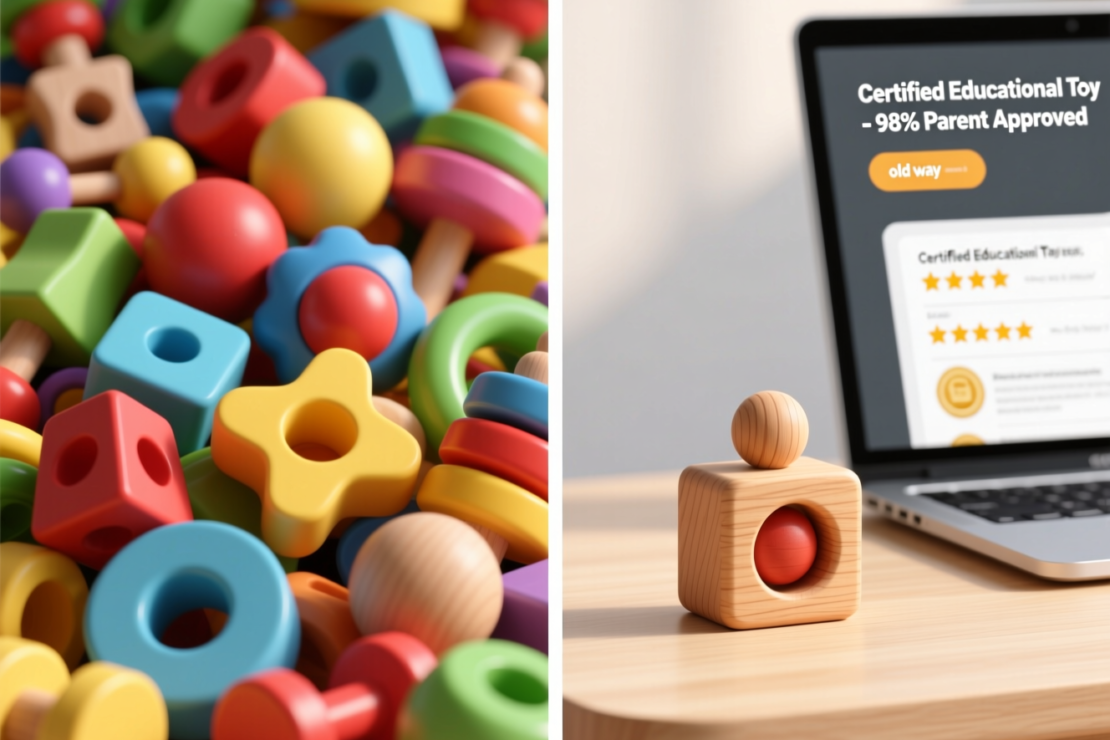
Gen Z parents grew up online. They trust reviews more than ads. They read comments. They check certifications. They ask other parents in group chats that respond faster than customer service.
Impulse purchase? Rare.
They want reasons. Solid ones.
Before clicking “add to cart,” they need to justify it. Not only financially. Emotionally and intellectually too.
If the product does not make sense, it does not make it home.
“Is It Cute?” Is Not Enough Anymore
Here is where it gets interesting.
Educational value is no longer a bonus feature. It is the baseline. If a toy supports creativity, motor skills, emotional growth, or early problem-solving, great. If not, parents start wondering why it exists.
STEAM is not a trend. It is a safety net. It gives parents a clear answer when someone asks, “Why did you buy that?”
Because it helps development. That is why.
Fun alone feels… suspicious.
Buy Less. Buy Better
Another big shift? Quality over quantity.
Parents are not filling homes with disposable stuff. They want products that last. Highchairs that grow with the child. Pushchairs that survive travel, weather, and toddler meltdowns. Furniture that adapts instead of expires.
Longevity equals value. And value equals peace of mind.
Sustainability plays into this too. It is no longer impressive. It is expected. If a product is not responsibly made, it has explaining to do.
And What About Licensing?
Let’s be honest. A logo alone does not close the deal anymore.
Parents are asking, “Yes, but what does it do?”
The licensed products that win today combine emotional connection with real function. Nostalgia helps. Story helps. Trust helps. But the product still needs to deliver quality and purpose.
Cute character plus poor durability? Not happening.
The Big Picture
This is not a temporary mood. It is a structural shift.
Parents are more intentional. More informed. More selective.
They are not buying more. They are buying smarter.
And for brands, the message is simple.
If your product cannot clearly explain why it deserves a place in a child’s life, parents will move on.
No drama. No noise.
Just quiet, intentional decisions.
Honestly? That might be the healthiest trend of all.


