

The licensing industry has a funny habit.
We spend months creating a product, negotiating licences, reviewing designs, discussing packaging, planning the launch and counting down to release day. Then the product finally reaches the shelves, someone buys it, everyone celebrates… and, somehow, that’s often where the conversation ends.
Which is slightly ironic.
After investing so much effort in convincing someone to become a customer, we seem surprisingly comfortable with saying, “Well, that was nice. See you next collection.”
For years, that made perfect sense because the sale was the objective. Once the product had done its job, it was time to move on and focus on the next launch.
The only problem is that consumers have quietly changed the rules without sending the rest of us the memo.
The Product Is No Longer the Destination
Take a look at the licensed products attracting the most attention today and you’ll notice something interesting. Collectibles invite fans to complete an entire series, physical products unlock digital experiences, accessories add new functionality, and characters continue telling stories long after they’ve left the shelf.
None of those ideas exists just to make products look more innovative. They all have one thing in common: they give consumers a reason to come back.
That’s a subtle but important difference.
The product is no longer expected to bring the relationship to an elegant conclusion. It’s expected to start one.
If anything, buying the product has become a bit like receiving an invitation rather than reaching the destination.
We’ve Become Very Good at Celebrating the Wrong Moment
The licensing industry knows exactly how to measure a successful launch. We can tell you how many units were sold, how quickly they disappeared from the shelves and whether they outperformed last year’s collection. There are dashboards, reports and enough charts to keep every marketing department happily occupied for weeks.
What we don’t always ask is what happened afterwards.
Did the customer interact with the brand again?
Did they discover something new?
Did they have any reason to remember us once the excitement of the purchase had worn off?
Or did we wave goodbye at the checkout and hope they’d eventually come back on their own?
It’s a little like organising a brilliant dinner party, opening the front door with great enthusiasm, and then disappearing into the kitchen for the rest of the evening.
Consumers Don’t Actually Want More Technology
This is usually the point where someone says, “Consumers expect connected products now.”
Do they?
Because I’ve yet to meet anyone who gets genuinely excited about downloading another app, creating another account or inventing another password they’ll forget before they’ve even finished their coffee.
People don’t wake up hoping their favourite licensed product comes with more technology.
They wake up hoping it comes with more value.
That’s an important distinction.
Exclusive content. Personalised experiences. Competitions. Behind-the-scenes stories. Rewards for buying the official product. Those are the things people remember.
Technology simply makes them possible. It isn’t the headline.
Perhaps Authentication Deserves a Little More Ambition
Authentication has traditionally had a very clear job description: prove the product is genuine and help protect brands from counterfeits.
Important? Absolutely.
Exciting? Well… let’s just say nobody has ever bought a product thinking, “I can’t wait to authenticate this.”
But what if authentication became something people actually wanted to do?
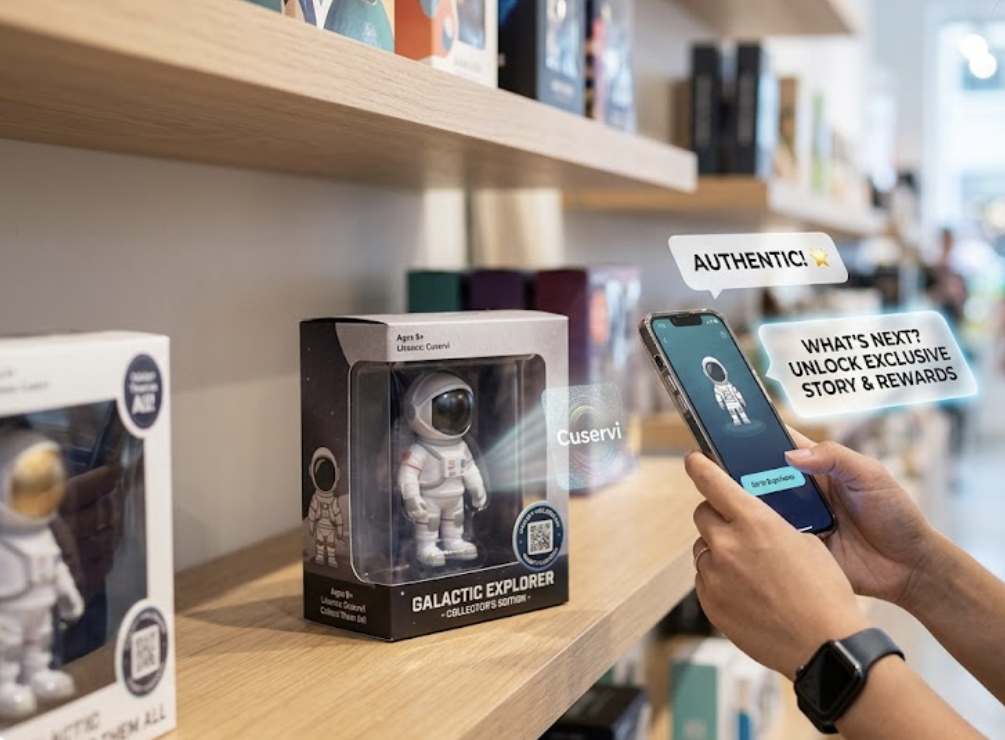
Imagine scanning an officially licensed product and instantly confirming it’s authentic while also unlocking exclusive content, entering a competition, registering your purchase or accessing experiences created specifically for genuine customers.
Suddenly, that simple scan isn’t just answering the question, “Is this real?”
It’s answering a much more interesting one.
“What’s next?”
Every Authentic Product Has Another Story To Tell
That’s how we think about Smart Holograms at Cuservi.
Yes, they help brands protect licensed products against counterfeits, and that’s exactly what they should do.
But stopping fake products is only part of the story.
Every authentic product also represents an opportunity to continue the conversation after the sale, reward loyal customers and create experiences that make owning the official product feel even more worthwhile.
Perhaps that’s where the licensing industry is heading.
Not towards products that simply sell successfully, but towards products that continue creating value long after they’ve left the shelf.
Because the brands that will stand out tomorrow may not be the ones celebrating the biggest sales figures.
They’ll be the ones whose customers never really feel that the story ended when they reached the checkout.


